
The Best Travel eSIM Plans for Stress Free Global Roaming
A travel eSIM is a digital SIM card that lets you connect to mobile networks abroad without needing a physical card. You simply scan a QR code or download a plan before your trip, instantly activating local data from your phone’s settings. This means you can skip searching for local SIMs and enjoy affordable internet access, maps, and messaging the moment you land.
Why Your Next Trip Needs a Digital SIM
For your next trip, a travel eSIM eliminates the airport hunt for physical SIM cards and the risk of losing or damaging them. You can buy and activate a data plan before you even leave home, so you’re connected the moment you land. This digital SIM lets you keep your primary number active for two-factor authentication while using a local eSIM for affordable data. No more overpriced roaming fees or swapping tiny plastic cards. You gain instant access to maps, rideshares, and translation apps, making your trip smoother from the first step. That’s why a digital SIM isn’t optional; it’s the smarter, more reliable choice for modern travel.
How embedded SIMs eliminate roaming sticker shock
Embedded SIMs kill roaming shock by letting you buy local data plans before you even board the plane, bypassing your carrier’s sky-high per-megabyte fees. Instead of returning to a bill filled with surprise charges, you pick a regional or country-specific eSIM from a marketplace—often at a fraction of the cost—and activate it in seconds. Because the eSIM is already soldered into your phone, you can switch between affordable data bundles on the fly without physically swapping cards. No more airport kiosk panic or dodging data usage to avoid nasty Singapore eSIM surprises.
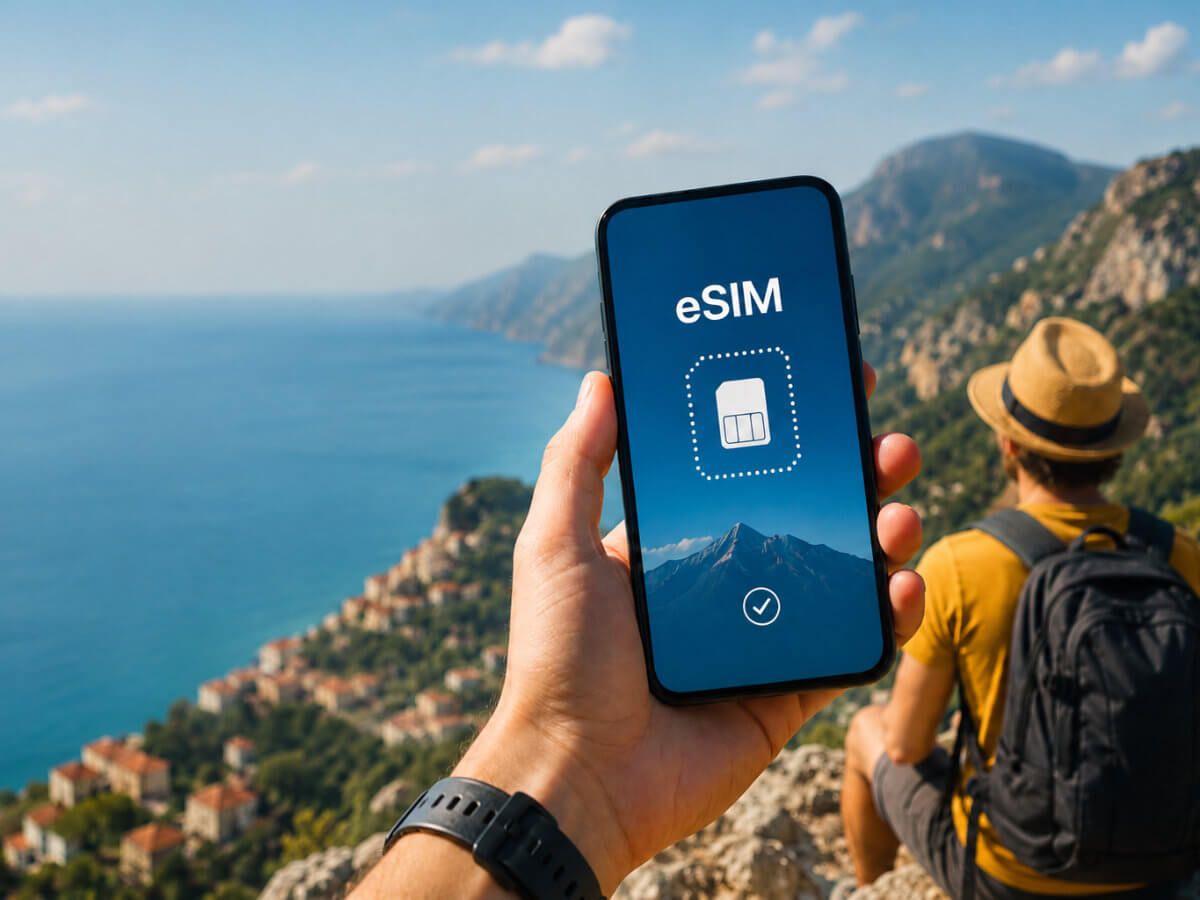
Embedded SIMs replace unpredictable roaming fees with cheap, upfront data plans that you control completely.
The shift from plastic cards to instant connectivity
The shift from plastic cards to instant connectivity is the biggest upgrade for modern travel. Gone are the days of fumbling to swap your physical SIM on the tarmac; with a travel eSIM, you purchase and activate a data plan before you even leave home. This means your phone stays connected the second you land, skipping the hunt for a local store or a fragile nano-SIM tray. Instant connectivity eliminates the dead zone between arrival and setup.
Q: How does this shift help right after I land? You don’t wait; your phone automatically connects to the local network from the moment your flight mode turns off.
You also stop worrying about losing that tiny plastic card during your trip.
Comparing Global Data Plans: Coverage vs. Cost
The sun was cutting a harsh glare through the windshield on the drive from Marrakech, and my eSIM’s data flickered—a tangible reminder that coverage often dictates the narrative of a road trip more than cost. In the medina, a cheap regional plan had been flawless, but here, only the premium global package held a signal, proving that the cheapest plan is a false economy if it drops you off the digital map mid-navigation. What I learned, leaning against a rented Duster, is that paying more for a tiered plan that prioritizes rural roaming actually saved me the hidden cost of getting hopelessly, expensively lost.
Regional plans for Europe versus worldwide packages
When choosing between a regional Europe eSIM and a worldwide package, your destination list is key. A Europe regional eSIM usually offers sprawling coverage across dozens of countries for a lower price than global plans, making it ideal if you’re hopping between Schengen nations. Worldwide packages often include pricier data in places like Asia or the Americas, which you won’t need if you stick to Europe. The catch is that global plans save you from buying a new eSIM for non-European stops, while regional ones give you cheaper high-speed data for your entire trip within Europe.
Regional Europe eSIMs beat worldwide packages on cost per GB for EU travel, but global plans win if you add destinations outside Europe.
Pay-as-you-go or unlimited—which fits your itinerary?
Choosing between pay-as-you-go or unlimited data really comes down to how you use your phone on the go. If your trip is short and you only need maps, messages, and occasional social media checks, a pay-as-you-go top-up keeps costs low and avoids waste. For heavy streamers, remote workers, or families sharing a connection, an unlimited travel eSIM offers peace of mind without monitoring every megabyte. Consider your daily habits: a few hours of video calls will devour a small data pack quickly, while an unlimited plan lets you roam freely. Don’t overpay for data you won’t use, but don’t risk running out mid-adventure either.
Match your plan to your travel style: pay-as-you-go for light, predictable use; unlimited for heavy, worry-free browsing.
Activating a Network Before You Leave Home
Setting up your travel eSIM before you leave home is the smartest move you can make. By activating your travel eSIM while still connected to Wi-Fi, you’ll avoid scrambling for a signal at an airport or paying for expensive temporary data. Most providers require you to install and activate your network before departure, as some plans only start working once you’re in the destination country—but the setup itself needs a stable internet connection. Do this while packing, and your phone will seamlessly switch over the moment you land. No hunting for local SIM cards or hotspot passwords—just instant connectivity.

Step-by-step setup on your smartphone
Before departure, activate your travel eSIM by first ensuring your smartphone is connected to Wi-Fi. Open your device’s settings, navigate to “Cellular” or “Mobile Data,” and select “Add Data Plan.” Scan the QR code provided by your eSIM provider, which downloads the profile. Label this plan (e.g., “Travel Data”) for clarity, then set it as your primary data line while keeping your home line for calls. Finally, toggle data roaming on for the travel plan. Complete activation by restarting your phone; the eSIM should connect to a local network automatically.
- Connect to Wi-Fi and navigate to settings
- Scan the eSIM provider’s QR code
- Assign a label and enable data roaming
- Restart the smartphone to finalize setup
QR codes and apps: the simplest installation methods
For the fastest setup, scanning a QR code for instant eSIM activation eliminates manual entry entirely. Simply open your phone’s camera, frame the code provided by your provider, and follow the one-tap prompt to download your data plan. Dedicated travel eSIM apps streamline this even further: they automatically generate your QR code after purchase, so you install it within seconds using the app’s built-in scanner. No paper instructions, no number typing, and no store visits are required.
- Buy your eSIM and receive a unique QR code directly via email or app.
- Open your phone’s camera settings and scan the code from your screen or a printout.
- Tap the “Add Cellular Plan” prompt to finalize installation in under 30 seconds.
Picking the Best Provider for Your Destination
To pick the best provider for your destination, first verify that their coverage map explicitly includes the regions you’ll visit, not just the country’s major cities. Compare data speed tiers, as some providers throttle to 3G speeds after a soft cap, which is especially critical for mapping or video calls in areas with weaker infrastructure. Prioritize providers offering local network partners rather than global roaming hubs, as this often yields lower latency. Check if the provider supports instant activation upon arrival or requires a pre-install step—this small detail can determine if your data works immediately. For multi-country trips, a regional plan often beats individual country eSIMs for cost and seamless switching. Finally, always scan recent user feedback for your specific destination, as provider performance can vary sharply between cities and rural zones.
Local operators with deep coverage versus aggregators
When picking the best provider, decide between local operators with deep coverage and aggregators. Local operators, like a country’s native carrier, offer superior network penetration in rural and remote zones, ensuring connectivity where aggregators might rely on fragmented roaming agreements. Aggregators, however, provide multi-country convenience via a single eSIM but typically depend on partner networks, which can lead to slower speeds or dropped signals in deep-coverage areas.
- Choose a local operator if your trip focuses on one region with challenging terrain (e.g., mountains, islands).
- Select an aggregator only when hopping between multiple countries and willing to accept variable signal strength.
- Verify if an aggregator uses the same primary carrier as a local operator for that destination to match coverage.
Reading fine print on throttling and data speeds
When selecting a travel eSIM, do not skip the fine print on throttling. Many budget plans advertise “unlimited data” but then severely restrict speeds after a small usage cap, often dropping from 5G to sluggish 128kbps. This makes maps, messaging, or ride-hailing apps nearly unusable in a destination. Scrutinize the fair-use policy: a plan offering 1GB at high speed daily is often more practical than a “true unlimited” plan that throttles after 500MB. You are paying for reliable connectivity, not a bottleneck. Prioritize providers that clearly state their throttling threshold before purchase to avoid slow data in a foreign place.
Device Compatibility: What You Need to Know
Checking your phone’s device compatibility is the first step before buying a travel eSIM. Your phone must be unlocked from its carrier and support eSIM technology; most iPhones from the XS onward, Google Pixels from the 3, and recent Samsung Galaxy models work. Some phones sold in China or Hong Kong may lack eSIM hardware entirely, so always check your device’s settings under “Cellular” or “Mobile Data” for an “Add eSIM” option. If your phone only accepts physical SIM cards, you cannot use a travel eSIM at all. Confirm these specifics before your trip to avoid hassle.
iPhone, Android, and newer models that support dual SIM
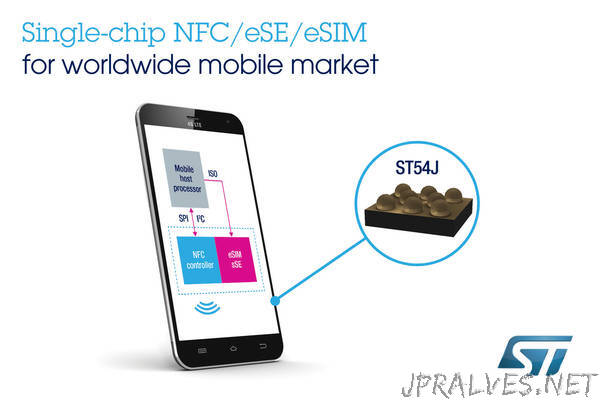
For travel eSIM, dual SIM support in iPhone, Android, and newer models is the critical hardware feature. On an iPhone XS or newer you can run one physical SIM and one eSIM simultaneously. Many modern Android flagships like the Google Pixel 7 and Samsung Galaxy S23 also support a physical SIM plus an eSIM, though some newer models (e.g., iPhone 14 in the US) are eSIM-only, forcing reliance on a single eSIM slot. You must verify that your device’s Dual SIM implementation allows an active eSIM profile for data while keeping your physical SIM for calls and texts, as this directly impacts roaming convenience.
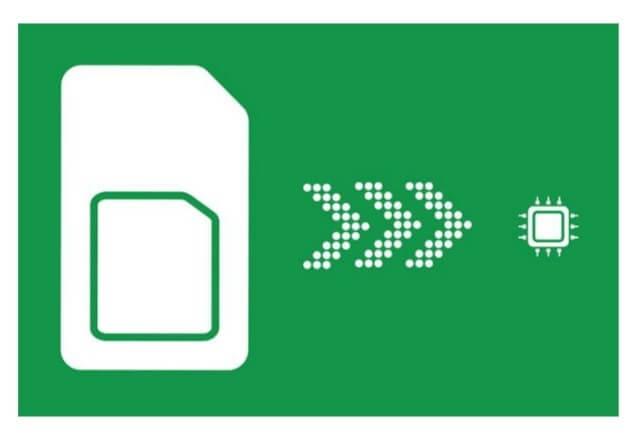
Checking eSIM eligibility for older phones
Before you buy a travel eSIM for that older phone, you’ll need to check eSIM compatibility by IMEI directly through your device’s settings or your carrier’s website. Most phones launched before 2018 lack the necessary hardware, so you can’t just assume it will work. Even some 2019 models, like specific budget ones, quietly skipped eSIM support entirely. Look under “Settings” > “Cellular” or “Mobile Data” for an “Add eSIM” option—if it’s missing, your older phone likely won’t take a travel eSIM.
Always verify your older phone’s IMEI against the carrier’s eligibility list before purchasing a travel eSIM, as older models often lack the required chip.
Real-Time Connectivity Hacks for Frequent Travelers
Frequent travelers know the panic of landing without signal. A top hack is travel eSIM auto-activation, which connects you to local towers the second your plane taxis, bypassing airport Wi-Fi queues. For real-time navigation, download your eSIM profile before departure to avoid data gaps. Use dual SIM mode to keep your home number for verification codes while the eSIM handles maps and messaging. Always toggle data roaming on for the eSIM line only; this prevents surprise charges on your primary SIM. For budget-friendly streaming, pre-load offline maps after activating, letting you switch between live traffic and cached routes seamlessly.
Switching profiles when crossing borders
Switching your eSIM profile when crossing borders is a seamless way to avoid roaming fees and maintain instant connectivity. As your flight lands, open your device’s settings and manually select the local profile you pre-downloaded, ensuring you latch onto a local network before the plane taxis. This profile swap typically takes seconds, letting you pop online for maps and messages without pausing. Use your primary profile for calls back home while the travel eSIM handles data, doubling your reliability.
- Set your default data line to the travel eSIM before departure
- Toggle off auto-network selection to avoid accidental cross-border billing
- Save carrier APN details from your provider for quick manual setup
- Test a data ping immediately after switching to verify connection
Keeping your home number active while roaming abroad
Keeping your home number active while roaming abroad is critical for receiving banking OTPs and two-factor authentication codes, which often fail on VoIP lines. A dual-SIM travel eSIM setup solves this by assigning your physical SIM’s home number solely to cellular voice and SMS, while the eSIM handles all data. This avoids the need to port your number or pay exorbitant roaming rates. For iPhone users, enable “Cellular Data Switching” to let the eSIM provide internet, while the physical SIM stays on for texts. This keeps your home number active locally without interruption, ensuring vital security messages arrive natively.
Common Pitfalls and How to Avoid Them
A common pitfall is buying an eSIM that doesn’t cover your exact destination, then losing data abroad. Always verify network compatibility for each country on your itinerary before purchase. Another mistake is activating the eSIM too early, which burns your plan’s days before you travel. Wait until you land. Also, forgetting to turn off your home SIM’s data roaming causes double charges—keep it disabled.
The key insight: download and install the eSIM before your trip, but only activate the plan once you arrive at your first destination to maximize every day of coverage.
Battery drain from constant network searching
Constant network searching is a notorious battery killer with travel eSIMs, as your phone frantically scans for weak foreign signals. This aggressive network hunting drains power rapidly, often leaving you stranded with a dead device. To avoid this, manually select a local network in your settings rather than relying on automatic search. A single manual selection can save hours of active battery life compared to endless background scanning. Q: Why does my phone get so hot and die fast with a travel eSIM? A: Your phone is burning energy by continuously polling for the strongest available tower, a process far more intensive than normal idle standby.
Misunderstanding activation windows and refund policies
Many travelers purchase a travel eSIM without noting the activation window, a strict deadline by which you must connect to a local network. If you activate too early, before your trip, the data plan begins counting down; if you miss the window entirely, the plan expires unused. Refund policies are equally specific—most providers deny refunds once the eSIM has been installed, regardless of activation status, and only offer credit within a limited cancellation period. Some carriers require you to physically be in the destination country to trigger the plan, making timing even more critical.
Misunderstanding activation windows and refund policies leads to lost money and wasted data; always confirm your travel dates match the eSIM’s validity, and read the refund terms before purchase.
Future Trends in Global Mobile Connectivity
Future travel eSIMs will shift from simple data provision to seamless, predictive connectivity. Your device will automatically negotiate the best local network at the border, eliminating manual profile downloads. Expect integrated satellite fallback for remote areas, ensuring constant signal. How will eSIMs handle varying network speeds across different countries? Future profiles will prioritize stable bandwidth for essential apps like maps and messaging, throttling background tasks to avoid surprise throttling by local carriers.
Embedded profiles in smart luggage and wearables
Embedded eSIM profiles in smart luggage and wearables eliminate manual SIM swapping, as these devices automatically download a travel profile upon crossing a border. A smart suitcase can independently switch to a local carrier when its integrated GPS or proximity sensor detects a new country. For a wearable like a smartwatch, the process follows a clear sequence: first, the device’s embedded profile checks for a regional network; second, it authenticates via a cloud-based carrier bundle; third, it activates data for navigation or messaging. This automation reduces the traveler’s cognitive load, as the wearable pre-caches a fallback profile for areas with spotty coverage.
Carrier partnerships reducing the need for physical swaps
Carrier partnerships are quietly making physical SIM swaps a thing of the past for travelers. When your home network has a direct deal with a provider abroad, your phone can seamlessly latch onto their towers as you land. You don’t need to hunt for a local shop or fiddle with a tiny card. Instead, your travel eSIM profile loads automatically, often before you even leave the airport. This means you stay connected from the moment you step off the plane, with no fumbling for a paperclip. It’s a hands-free shift, where the network handover happens in the background, just like your regular roaming.
What Exactly Is a Travel eSIM and How Does It Work?
The Core Technology Behind a Virtual SIM Card
How the Activation and Setup Process Actually Functions
Why It Replaces the Need for a Physical Plastic SIM
Key Features That Make a Travel Data Plan Stand Out

